

Contact Person: Mr. Feng
Cell Phone:13332655480
Tel:400-8005032
Tel:0769-85991992
Email addre:feng@nuoxingdz.com
Address: Building 14, Golden Town, No.7 Keji Avenue, Houjie, houjie town, Dongguan
In recent years, the development of electronic products is extremely rapid, and its products are more and more diverse, and the application fields are more and more extensive, can long-term reliable, safe and in a wide range of conditions under the normal operation of small power supply. Lithium-manganese battery in a large number of battery varieties with the above excellent characteristics, fully able to meet the diverse needs of small high-energy.
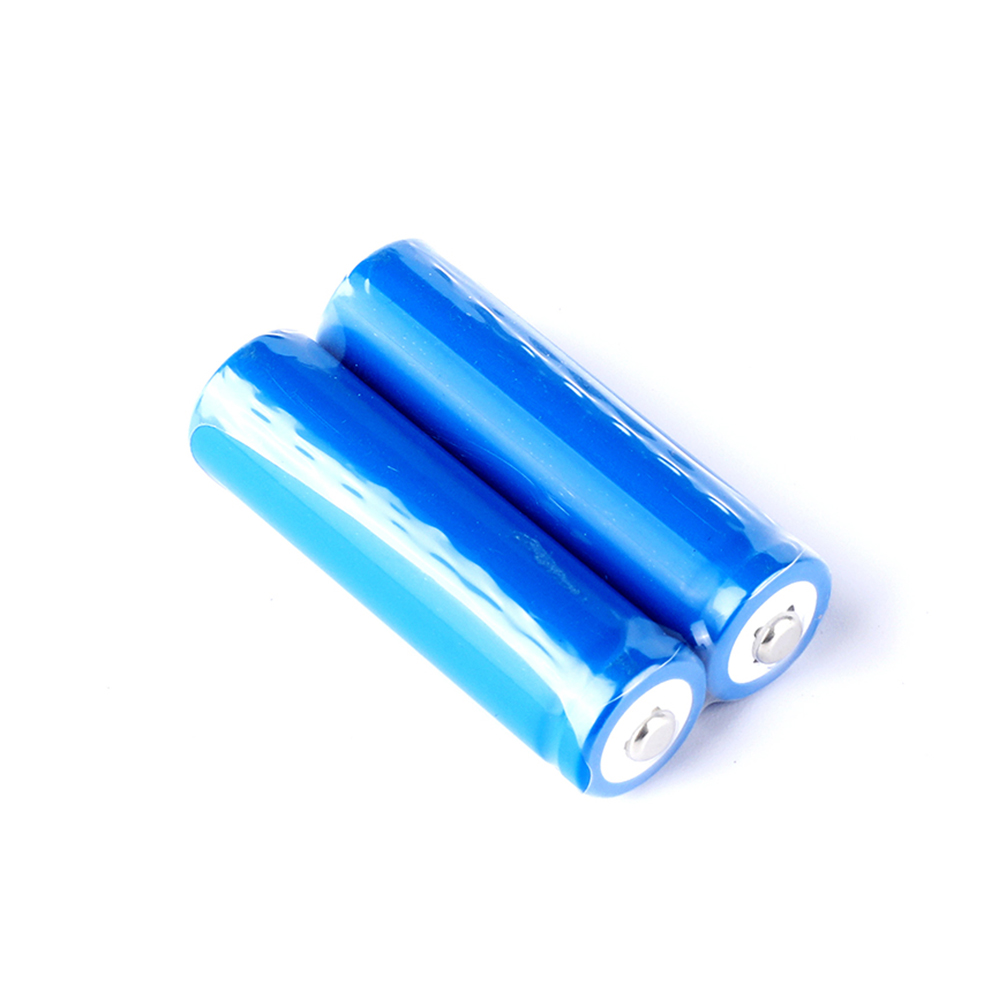
Lithium-manganese battery can be rechargeable and non-rechargeable two, rechargeable lithium-manganese battery also known as lithium manganese battery, output voltage nominal 3.7 V, short life is not easy to store. Rechargeable lithium-manganese batteries and nickel-cobalt-manganese ternary batteries. Non-rechargeable lithium battery I found that the technology of the lithium-manganese dioxide battery, the nominal voltage is 3.0 V, the annual self-discharge of less than 2% , room temperature can be stored for 10 years.
Why lithium-manganese batteries don't charge:
1. The charging characteristics of lithium-manganese Battery: if the disposable lithium battery is charged by an external charger, the reverse reaction of discharge reaction will take place inside the battery, which will cause the sound b-component MnOOLi to decompose and regenerate Li and MN02, the battery voltage also rises. 2. The dangers of recharging lithium-manganese batteries: all the lithium-manganese batteries on the market are marked with the words“No recharging” on the outside, emphasizing that such batteries can not be recharged. Lithium-manganese batteries are manufactured using organic solvents with low boiling points, where the 1,2-Dimethoxyethane organic solvents have a low flash point temperature. If the lithium-manganese battery is not sealed properly due to thermal expansion during charging, are prone to 1,2-Dimethoxyethane from the battery, if the spark or smoking sparks, may cause combustion hazards. 4. During charging, the reaction inside a lithium-manganese battery produces Li, an irregular crystal that resembles a branch, called a dendrite. If the dendrite punctures the membrane during the growth process, causing a short circuit in the battery, combustion, explosion and other accidents may occur.